
Stories · September 28, 2026 · 3 min read
What the $150 dump fee is really about (and how to never pay it)
Black tanks, grey tanks, and the ten-minute chore that keeps $150 in your pocket. An honest explainer from people who'd rather sanitize your kitchen than empty your tanks.
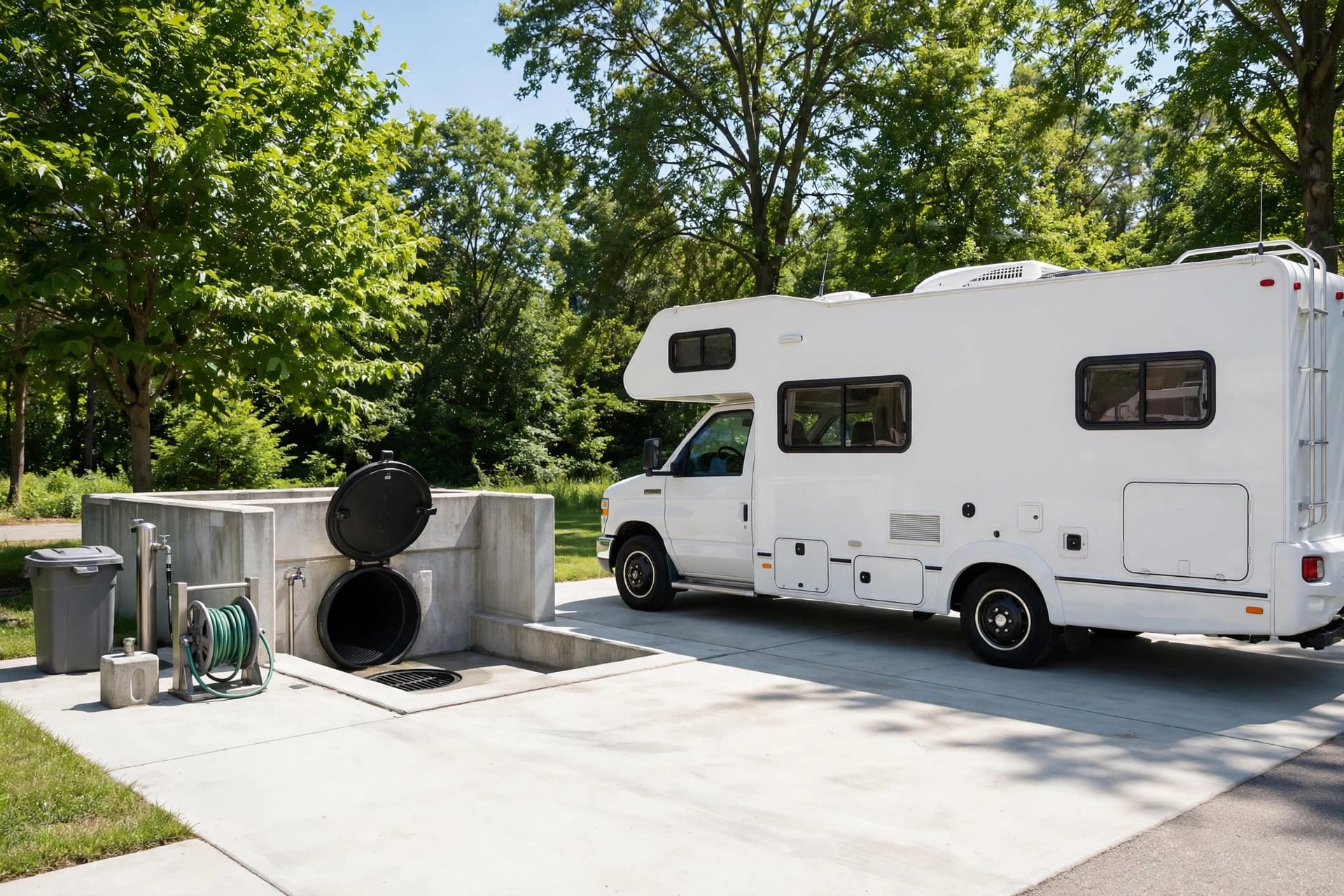
Let's talk about the least glamorous line item on our pricing page: if the black and grey tanks don't come back empty, there's a $150 dump fee. No exceptions, no hard feelings, no mystery. Here's the full story — what the tanks are, how easy they are to empty, and why the fee exists in the first place.
What the tanks actually are
An RV has three tanks, and only two of them matter here:
- Fresh water tank — clean water for taps and the shower. Comes back however it comes back; no fee, no judgment.
- Grey water tank — everything that goes down the sinks and the shower drain. Soapy water, basically.
- Black water tank — the toilet. This is the one everyone pictures, and it's far less dramatic than you'd think.
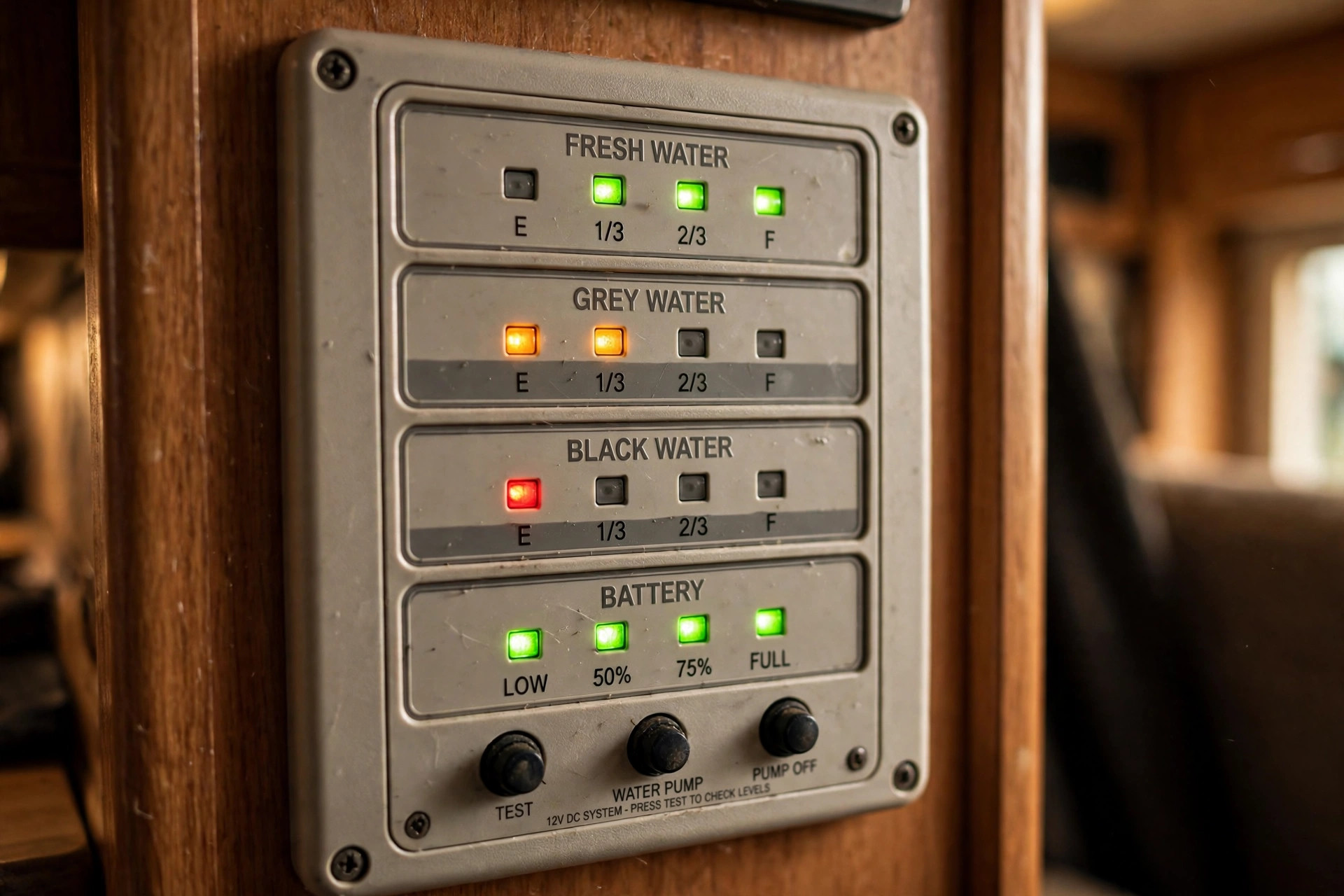
For a normal weekend trip, you just use everything normally and keep an eye on the gauges. Nothing to manage, nothing to think about — until the last day.
Emptying them is a 10-minute errand, not a project
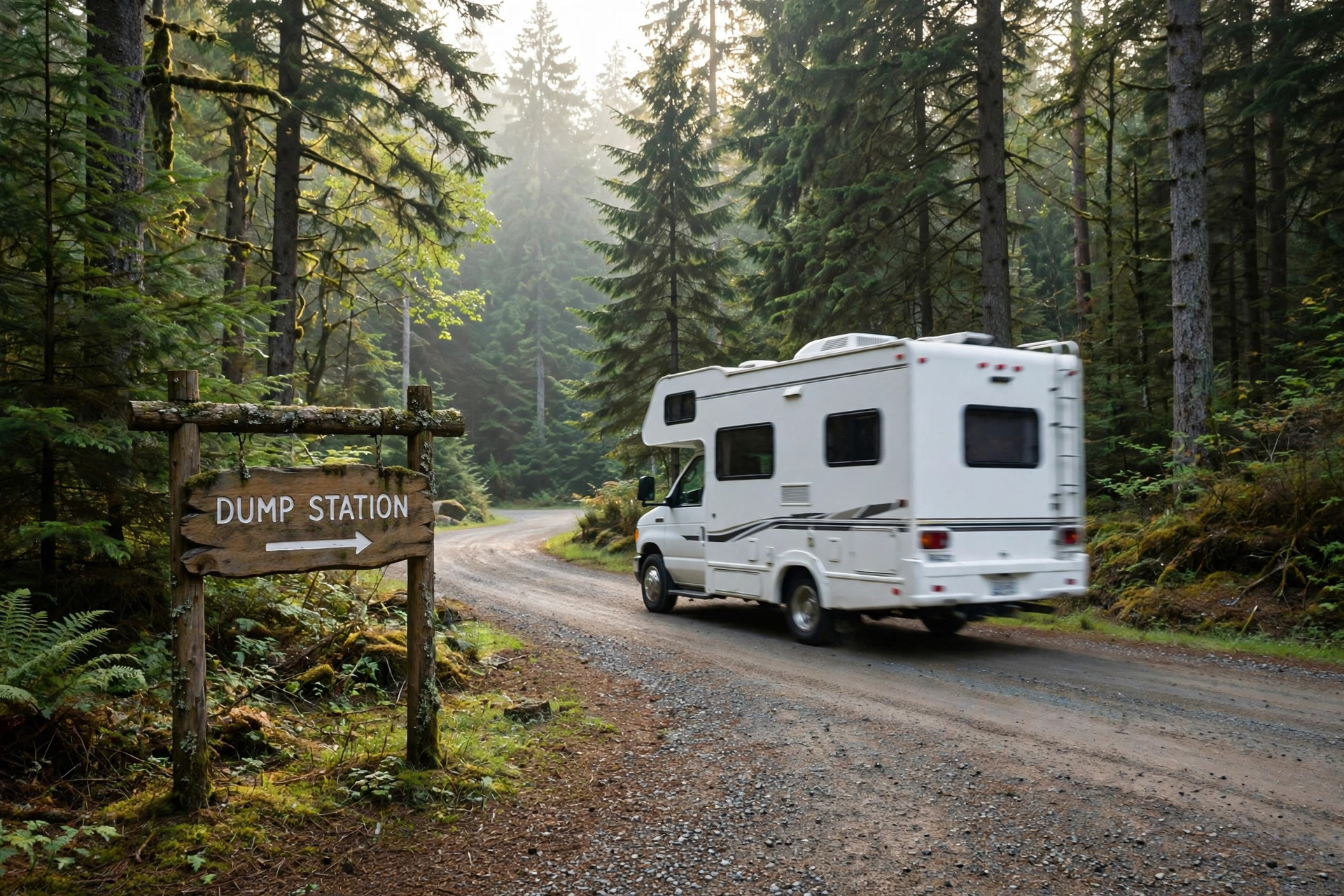
Almost every campground has a dump station, and they're designed for exactly this. Here's the whole procedure:
- Gloves on. Disposable gloves live in the rig's utility bay.
- Connect the sewer hose from the RV's outlet to the dump station inlet. It twists on — you'll feel it seat.
- Open the black tank valve first. Let it drain completely, then close it.
- Open the grey tank valve second. The soapy grey water rinses the hose out behind the black water. This order — black, then grey — is the golden rule.
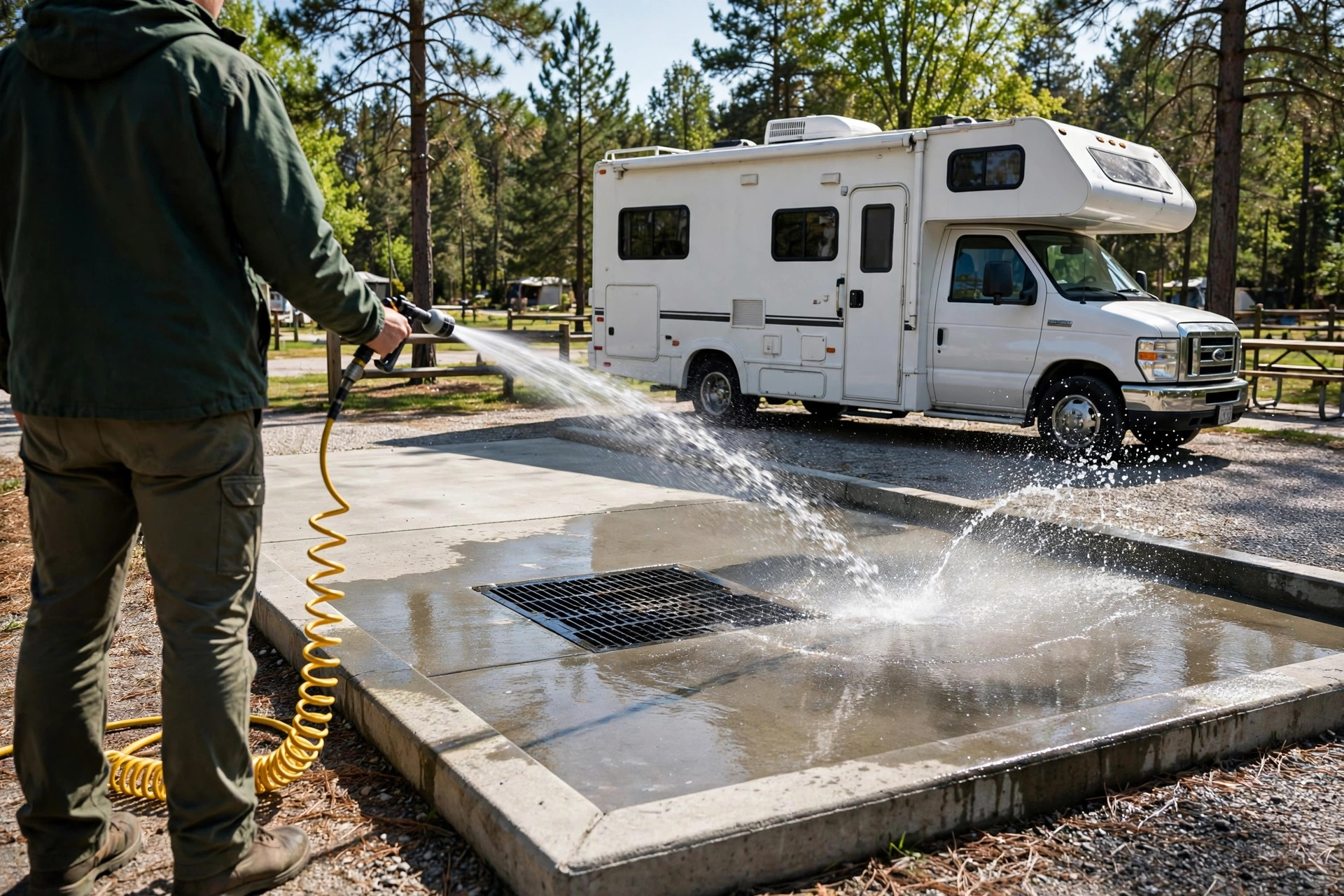
- Rinse everything with the station's rinse hose, stow your gear, and wash your hands.
Five to ten minutes, and you're done. Two things people get wrong:
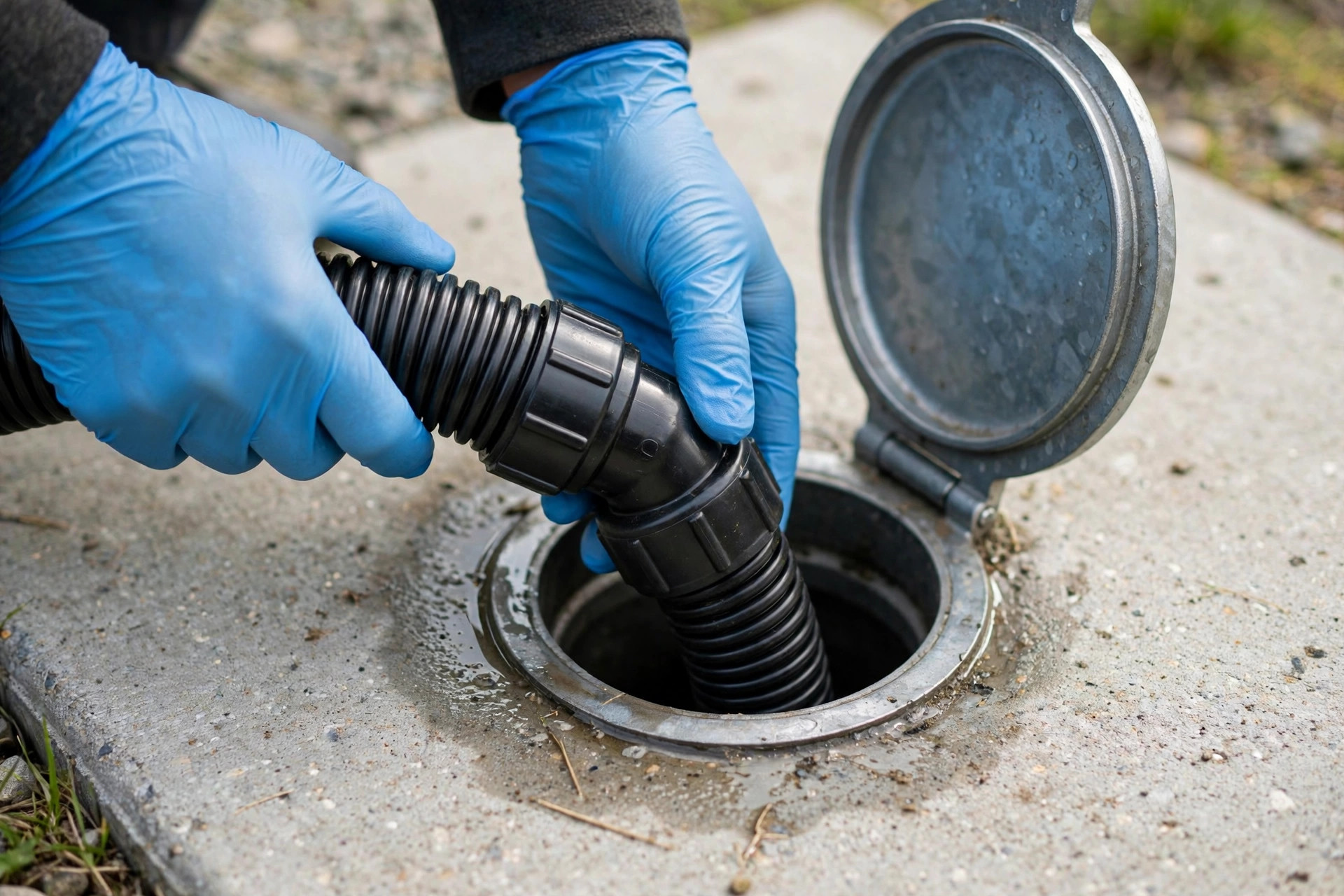
- The rinse hose is NOT drinking water. It's non-potable, meant for hoses and concrete. Never fill your fresh tank from it, and never let it touch your fresh-water gear.
- Keep the black valve closed until the tank is at least two-thirds full, then dump it all at once. Leaving it cracked open lets liquid drain while solids stay behind — and that's how clogs happen.
And the cardinal rule of dump stations: be quick if there's a line, rinse the pad before you leave, and take your gloves with you. Leave it cleaner than you found it.
So why $150?
Honesty time: emptying someone else's tanks is nobody's favorite job, and turnover day is already packed — full sanitization, restocking, inspection, photos. We'd rather spend that time making the rig spotless for the next family than doing a chore the renter can do in ten minutes at any campground on the way home.
So the fee isn't really a fee. It's a nudge. It's priced to make you think, "yeah, I'll just stop at the dump station," which is exactly what we want you to think. Every renter who brings the tanks back empty gets the same sparkling rig next time, and nobody pays anything extra.
How to never pay it
- Dump before you head home. Most campgrounds have a station right by the exit — it's literally on your way out.
- Watch the gauges on the last day so you're not surprised.
- Only RV toilet paper goes in the toilet (we stock the right kind). Regular TP is the #1 cause of the clogs that make dumping unpleasant.
- When in doubt, ask us. We walk every renter through the valves at pickup. There are no dumb questions — a two-minute refresher beats a $150 fee every time.
That's the whole story. Ten minutes, a pair of gloves, black-then-grey, and the $150 stays exactly where it belongs: in your pocket.
Questions about anything RV-related? We answer everything at pickup, patiently and twice if needed. Check availability and book your dates →