
Stories · October 5, 2026 · 4 min read
The perfect Mt. Rainier weekend in an RV: Paradise, waterfalls, and alpine lakes
A two-night RV itinerary for the mountain: arrive via the Nisqually Entrance, beat the Paradise parking crunch, and catch Narada Falls and Reflection Lakes along the way.
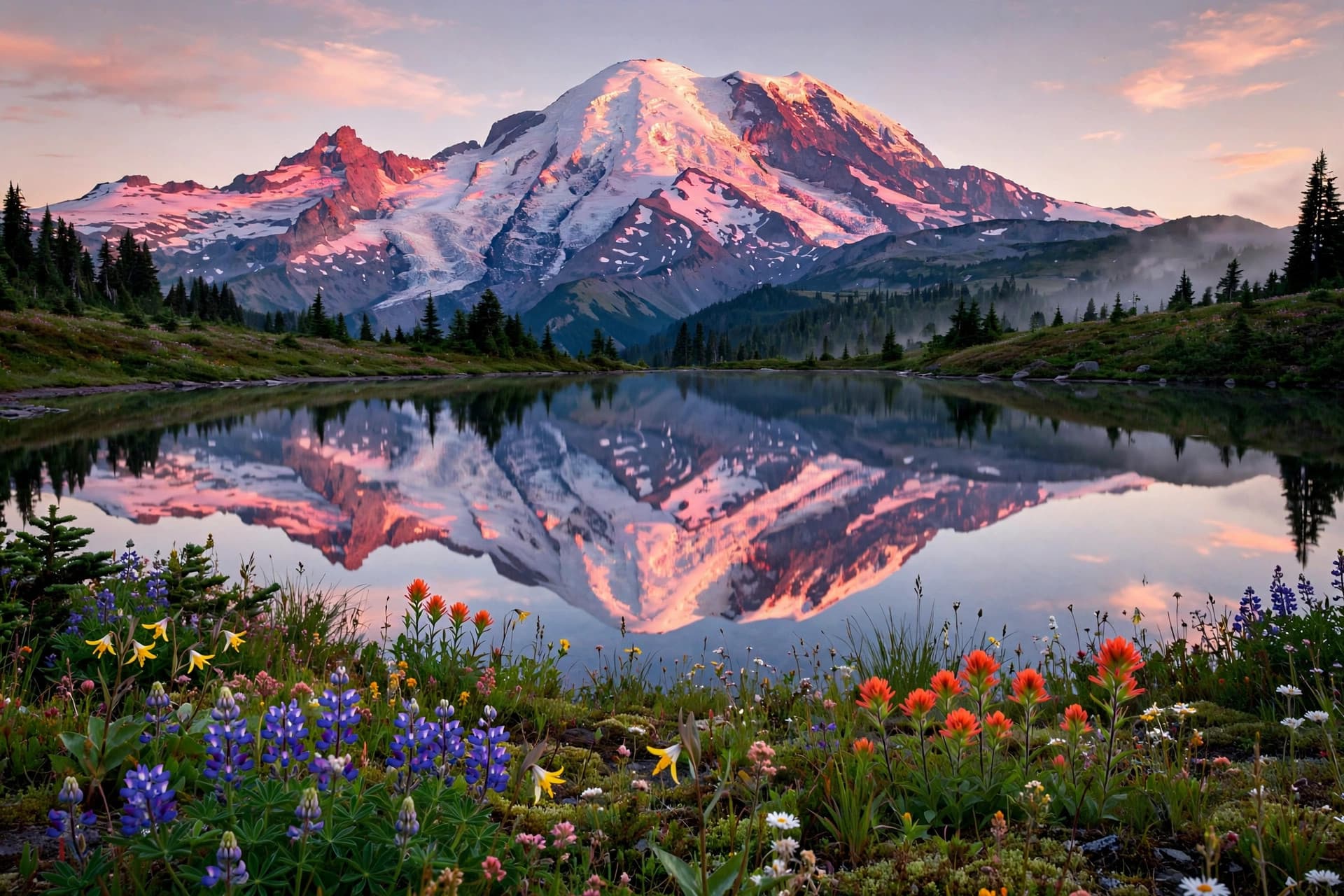
Mount Rainier is the trip our renters ask about most, and it's easy to see why — a 14,410-foot volcano rising straight out of wildflower meadows, less than a half-day's drive from Lake Stevens. Here's how to do it right in a weekend.
Know before you go (2026 season)
A few things that trip people up, all current as of this writing:
- No timed entry reservations in 2026. The park ran a timed-entry pilot in 2024 and 2025, then dropped it — entry is currently first-come, first-served. But the policy has changed every year lately, so check the NPS Mount Rainier page before your trip in case it changes again.
- Parking is the real reservation system now. Paradise is the park's crown jewel and its lots fill by around 10 a.m. on summer weekends. Once they're full, rangers meter entry at the gate. The fix is simple: arrive before 7:30 a.m., or come after 4 p.m. Weekdays are dramatically easier than weekends.
- It's $30 per vehicle, good for seven days. The park is cashless at entrance stations, so bring a card. (The $80 America the Beautiful pass covers Rainier plus every other federal park for a year.)
- This is a summer-fall trip. Paradise sits around 5,400 feet, and snow lingers well into summer. Late July through September is the sweet spot — wildflowers peak in late July and early August in a normal snow year.
Day 1 (Friday): In through the Nisqually Entrance
Leave Lake Stevens with enough daylight to enjoy the drive — you'll enter through the Nisqually Entrance (via SR 706), the park's classic southwestern gateway, passing old-growth forest along the Nisqually River.
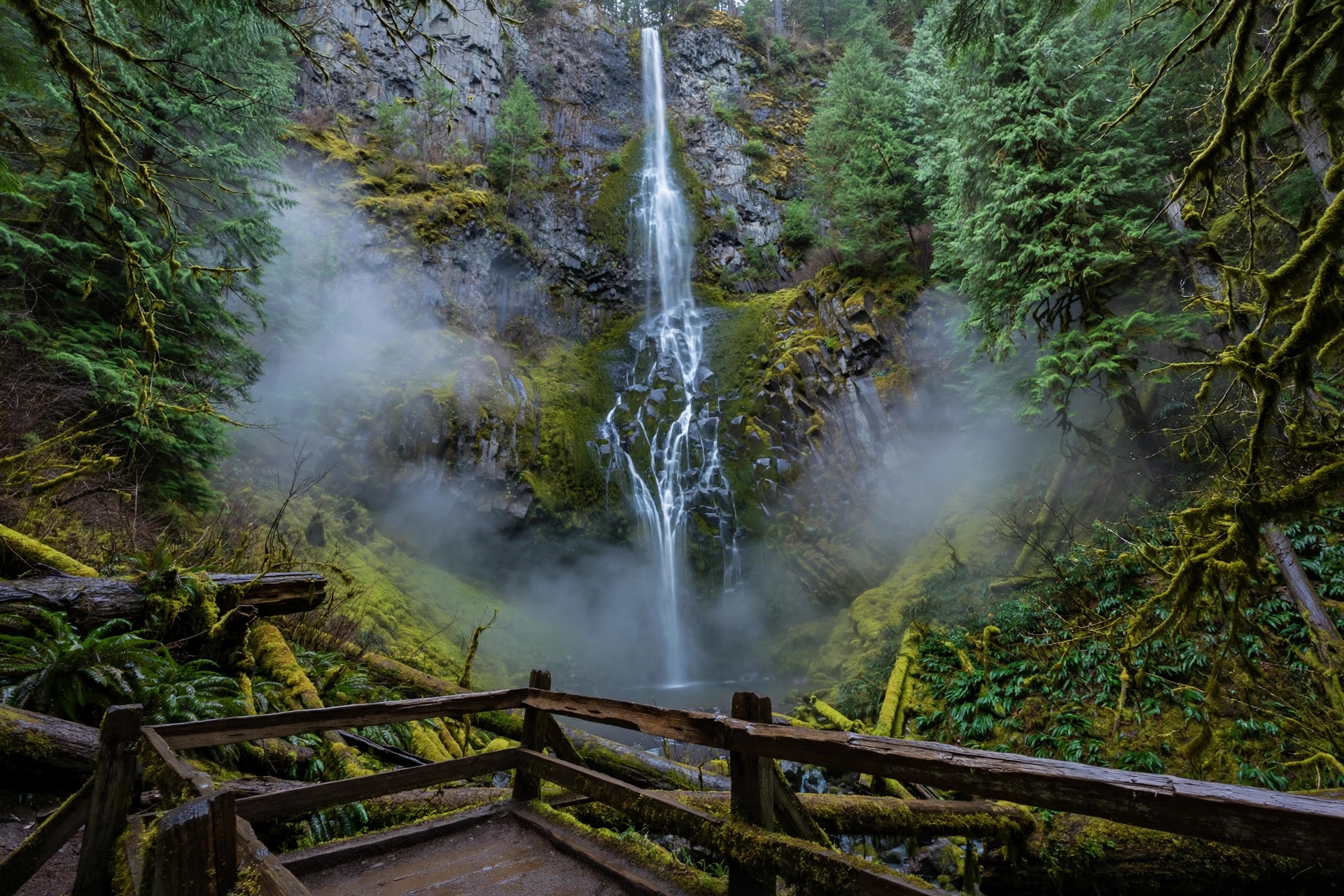
Stop at Longmire first: it's the park's historic heart, with a small museum and the trailhead for easy old-growth walks. Then continue up toward Paradise, stopping at Narada Falls — a roadside waterfall you can hear before you see, an easy leg-stretcher right off the road.
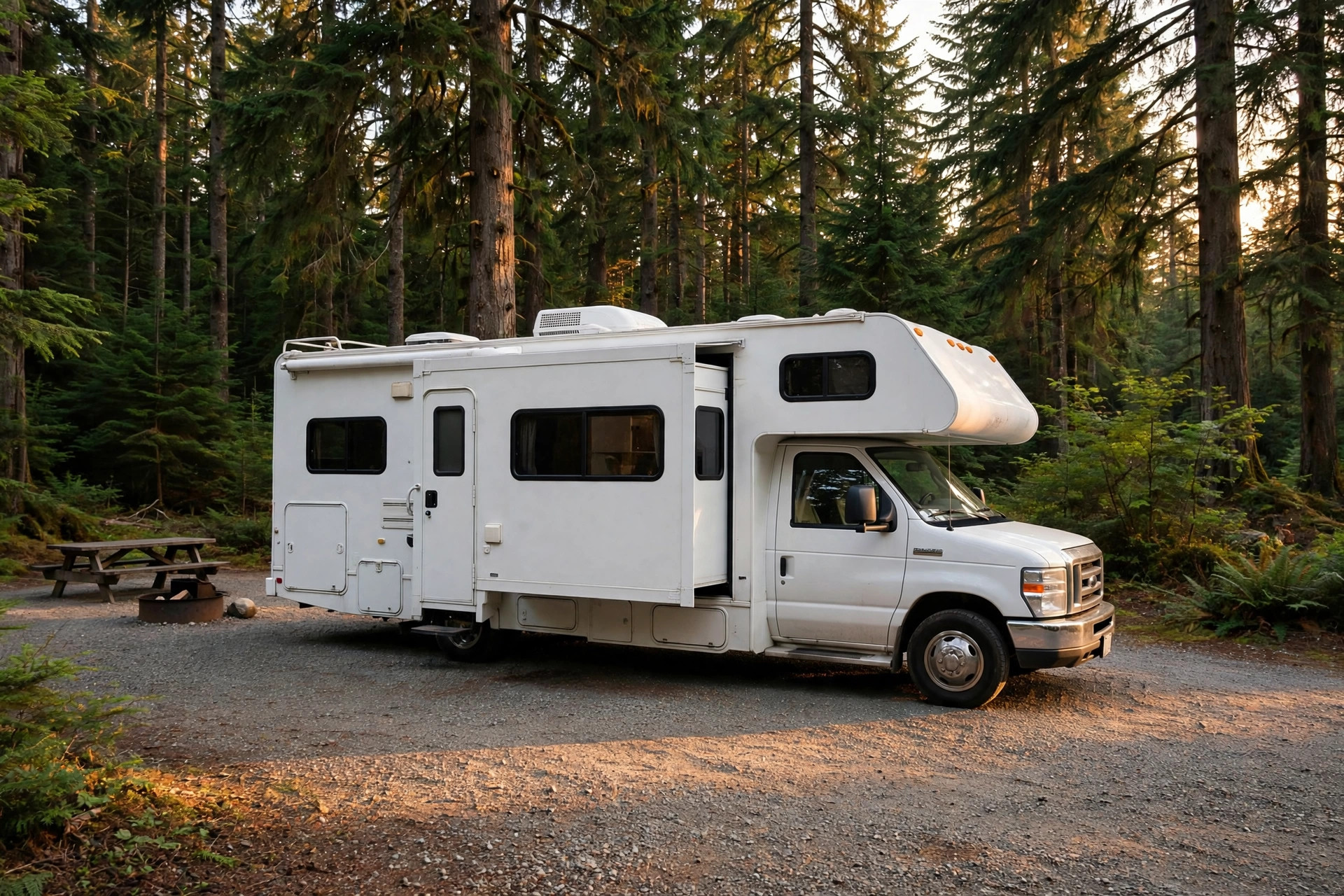
Set up camp for the night. Cougar Rock Campground is the closest campground to Paradise and the obvious base camp — reserve it on recreation.gov as early as you can, because summer weekends sell out. Get the rig level, put the slide-out out, and turn in early. Tomorrow starts before dawn.
Day 2 (Saturday): Paradise, early and slow
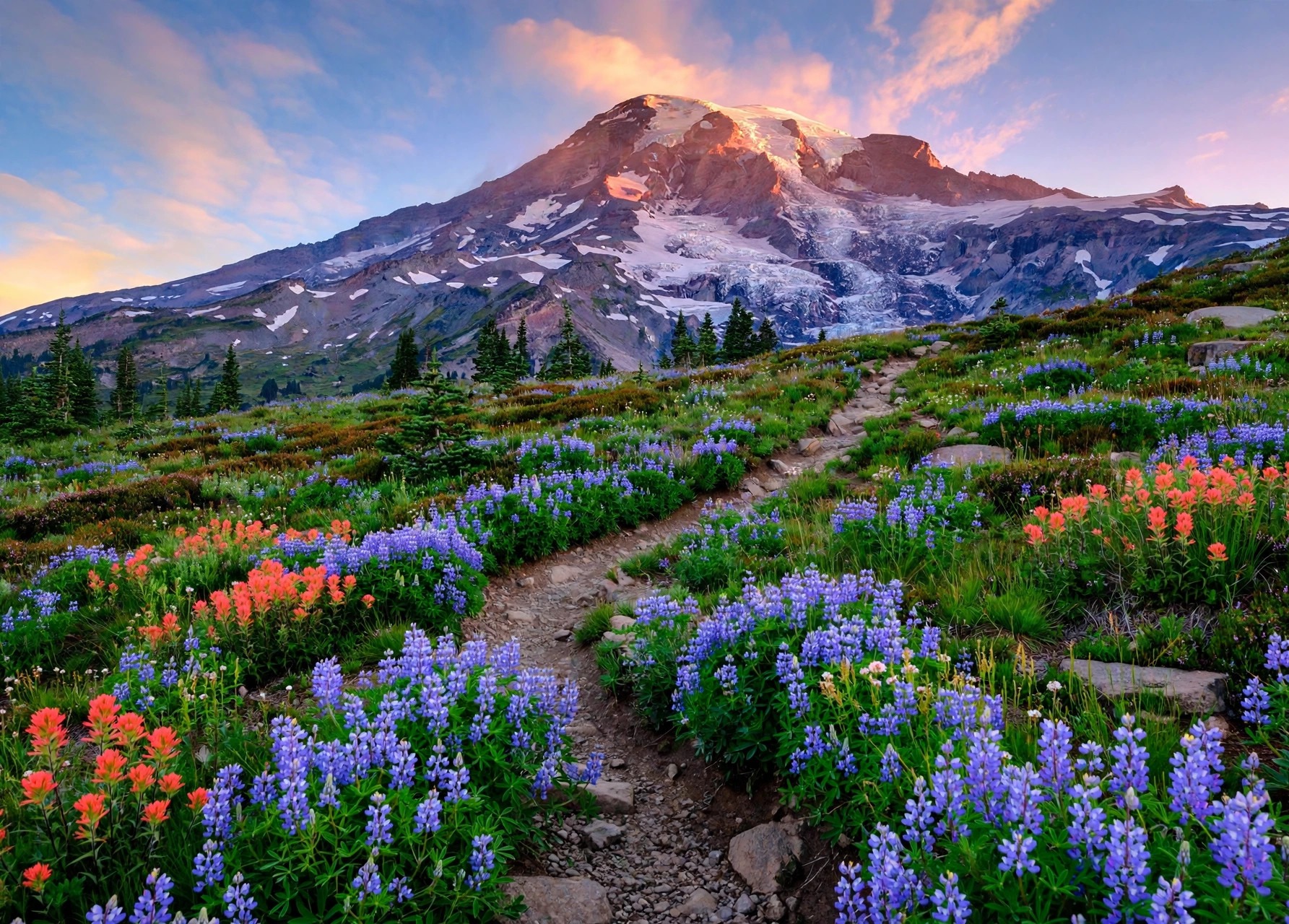
This is the main event, and the whole day hinges on one decision: be at the Paradise parking area before 7:30 a.m. It sounds brutal. It is worth it. You'll watch the mountain go pink at sunrise with a fraction of the midday crowd, and you'll actually get a parking spot.
From Paradise, the meadow trails fan out in every direction. You don't need a plan beyond "walk uphill toward the mountain until you're happy, then walk back." The wildflower meadows in late July are genuinely staggering — lupine and paintbrush in drifts, with the glaciers hanging above them. Bring layers, rain gear, sunscreen, and more water than you think; mountain weather changes fast and the sun at 5,400 feet is no joke.
Head back down in the early afternoon as the day crowds peak, rest at camp, then drive back up in the late afternoon for Reflection Lakes — small alpine lakes that, on a calm evening, hold a mirror image of the mountain. It's the most photographed spot in the park for a reason, and late day is when the wind drops and the reflection appears.
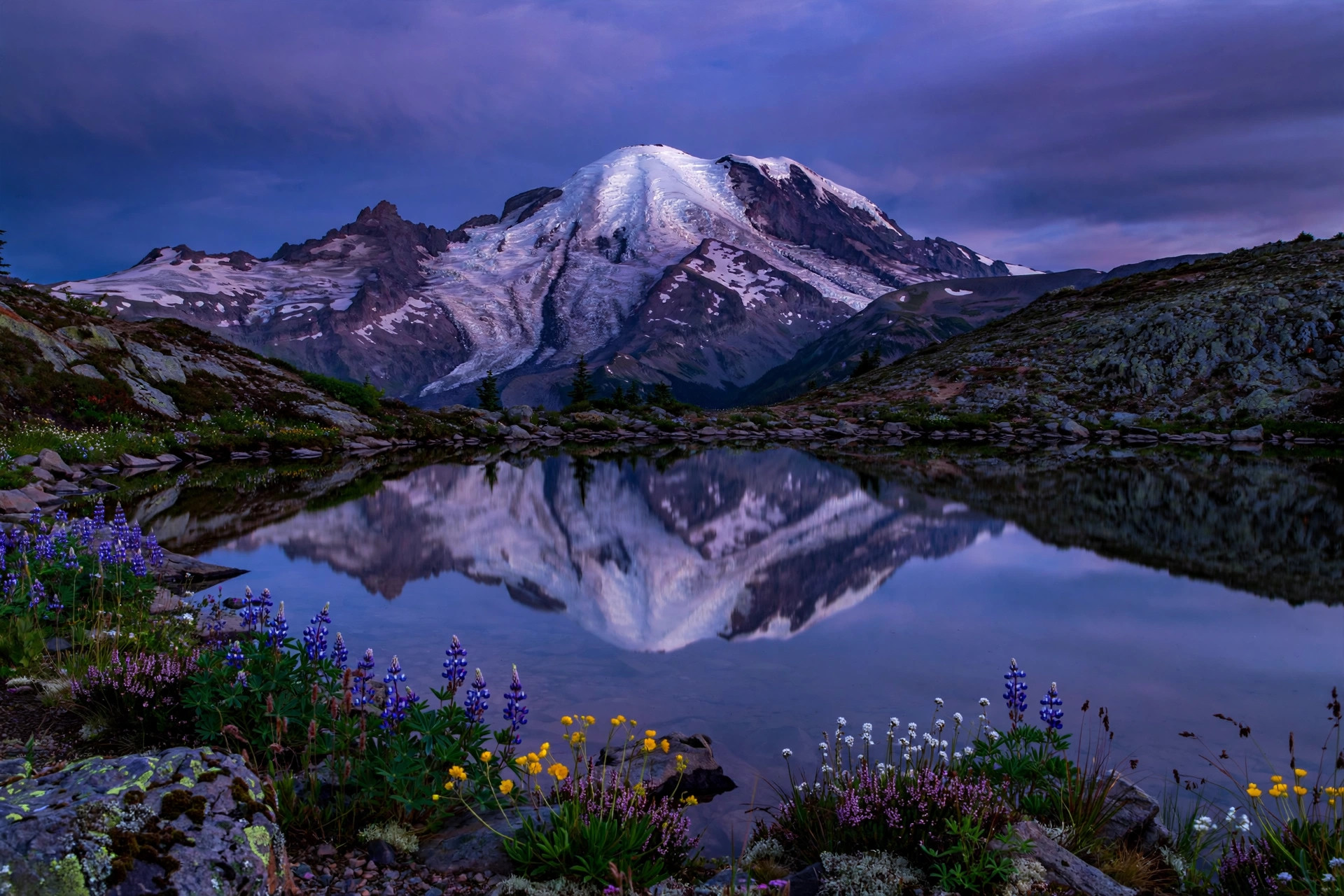
Dinner back at the rig, stars overhead, mountain looming in the dark. This is the night you'll talk about.
Day 3 (Sunday): One more view, then home
Sleep in a little. If you want one more stop, the Sunrise side of the park (via the White River Entrance) is the other great viewpoint area — but it's a real drive from the Paradise side, so treat it as a full separate trip rather than a Sunday add-on. A better lazy-Sunday move: revisit Narada Falls in morning light, browse the Longmire museum properly, and roll out of the park by midday.
The RV-specific notes
- RVs our size are a common sight here — the park roads are standard two-lane mountain highways. That said, Paradise parking is tight for larger rigs even when you arrive early — have a backup plan and don't expect to circle the lot at noon.
- Fill up before the park. There's no fuel inside Mount Rainier; top off in Ashford or Enumclaw depending on your route.
- Generator hours matter here. Most park campgrounds are dry, so you'll run off batteries and the onboard generator — which is exactly what it's for.
- Chains in winter, irrelevant in summer. If you ever come back for a winter trip, know that all vehicles must carry tire chains in the park from November 1 through May 1.
Rainier weekends book out fast in July and August — if you're reading this in spring, that's your sign. Check availability and book your dates →