
Stories · October 19, 2026 · 4 min read
The Olympic Peninsula 3-day RV loop: mountains, rainforest, and coast in one trip
Hurricane Ridge, Lake Crescent, Ruby Beach, and the Hoh in three days — a first-timer-friendly loop from the Seattle area, with the RV-specific tips that actually matter.
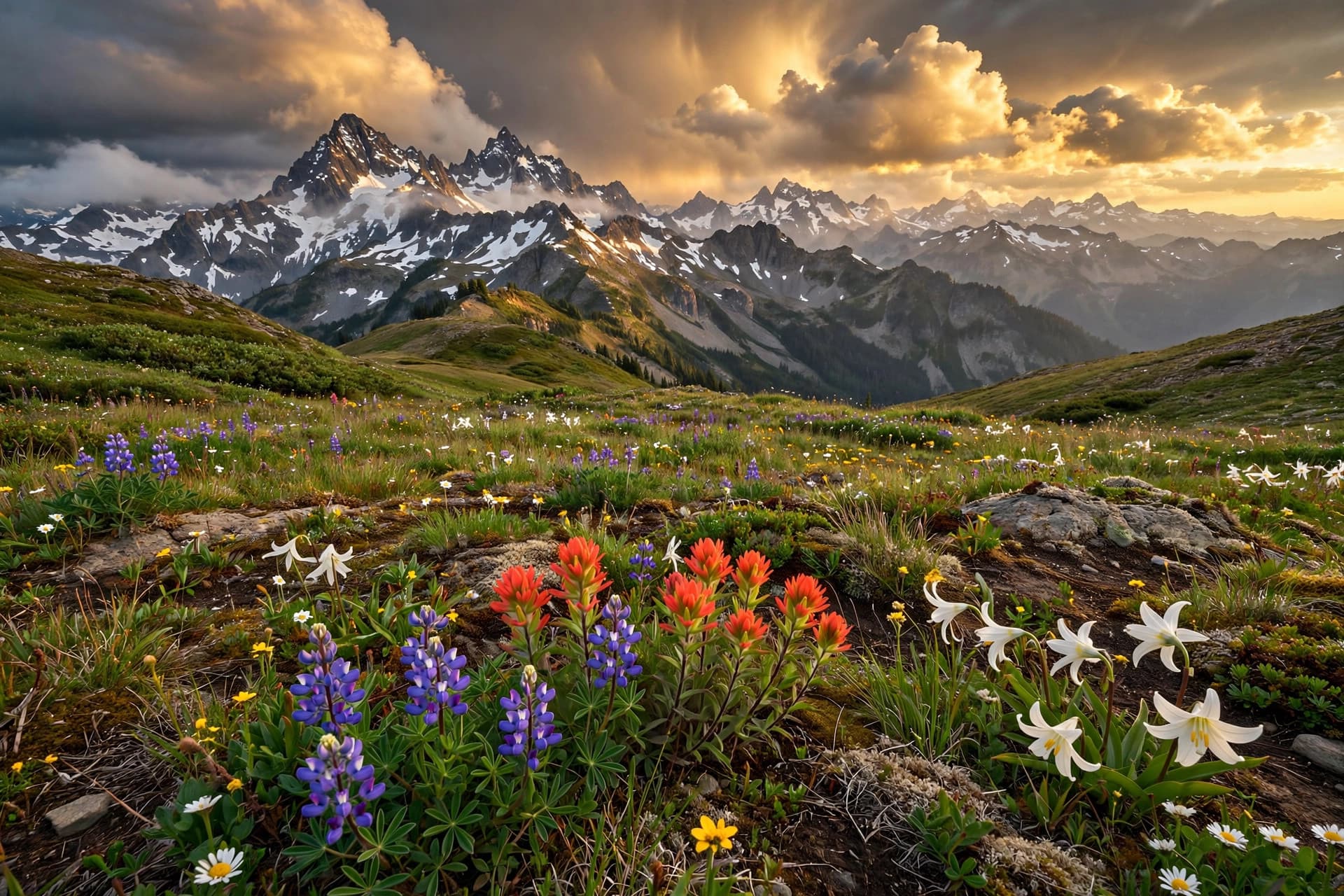
If you only take one road trip in Washington, make it this one. Olympic National Park packs three completely different worlds — alpine ridges, temperate rainforest, and wild Pacific coastline — into a single park, and they're close enough together to string into a long weekend. Here's how we'd do it in our 28-foot Class C.
Before you go: the two things RVers must check
The park pass. Entry is $30 per vehicle, good for seven days, and it covers every stop below. If you visit national parks more than a couple of times a year, the $80 America the Beautiful annual pass pays for itself fast.
Hurricane Ridge Road and your rig. Hurricane Ridge sits 17 miles up a winding mountain road from Port Angeles, topping out at 5,242 feet. The road runs a full schedule in spring, summer, and early fall, then drops to a limited winter schedule with chains required from November through March. Here's the RV-specific part: the park has published vehicle size restrictions for Hurricane Ridge Road in the past, and they can change — check the current NPS road page before driving a 28-footer up. If the road's a no-go for the rig, it's still absolutely worth the trip in a towed car or on a day you leave the RV at camp. Also know this: the historic day lodge at the top burned down in 2023 and there is still no permanent replacement — just temporary restrooms and a contact station. Bring your own food, water, and warm layers. At 5,000+ feet it's routinely twenty degrees colder and much windier than Port Angeles, even in August.
Most park campgrounds are dry (no hookups), so plan to run off your tanks and batteries inside the park, and fill up on groceries and fuel in Port Angeles — it's the last real town before the wilderness.
Day 1: Up to Hurricane Ridge, down to Lake Crescent
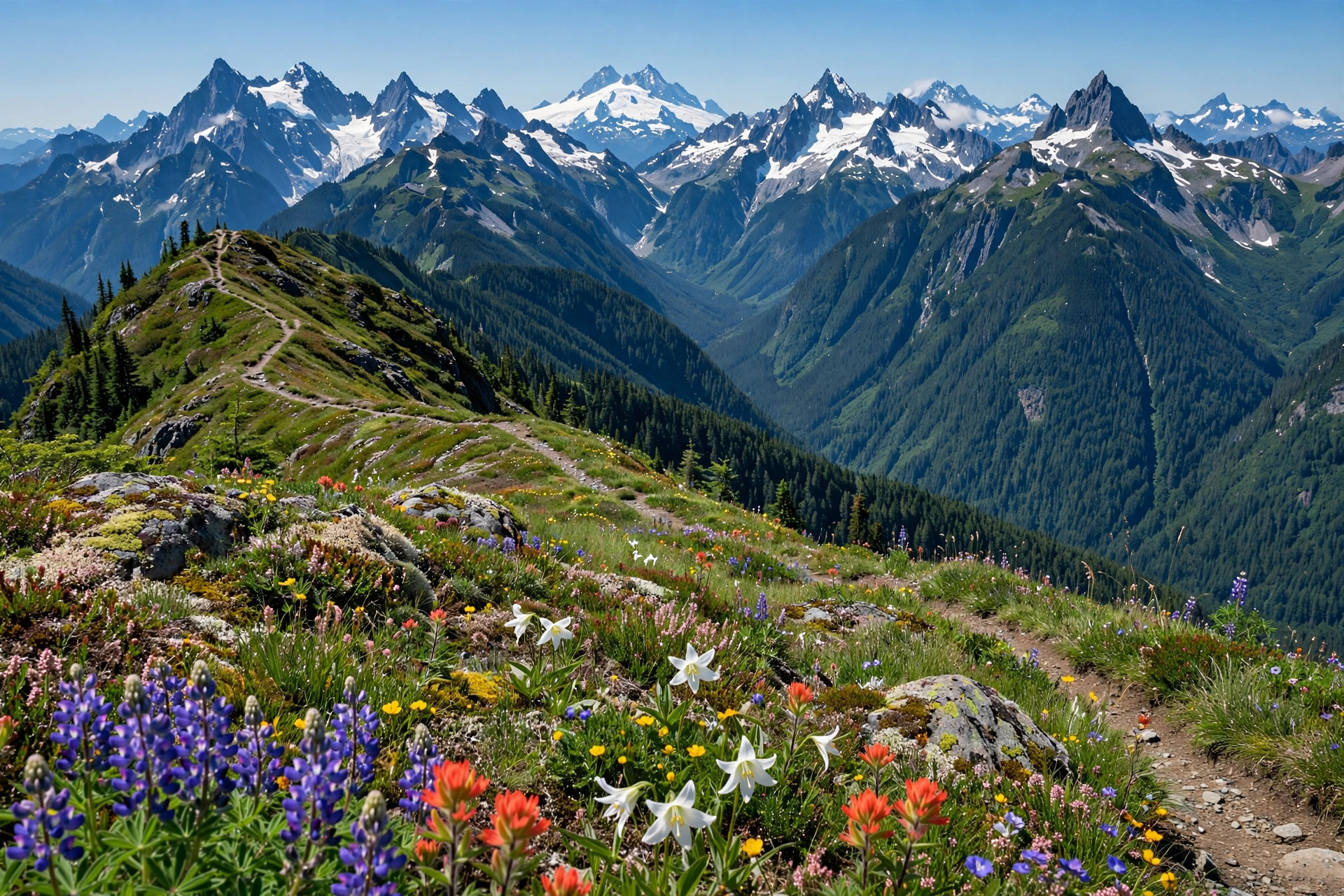
Get an early start and point the rig at Port Angeles. If Hurricane Ridge Road is open to your rig, drive up midday: on a clear day you look south into the heart of the Olympics and north across the Strait of Juan de Fuca all the way to Vancouver Island. Walk one of the short ridge trails, eat the lunch you packed (remember — no café up there), and soak it in.
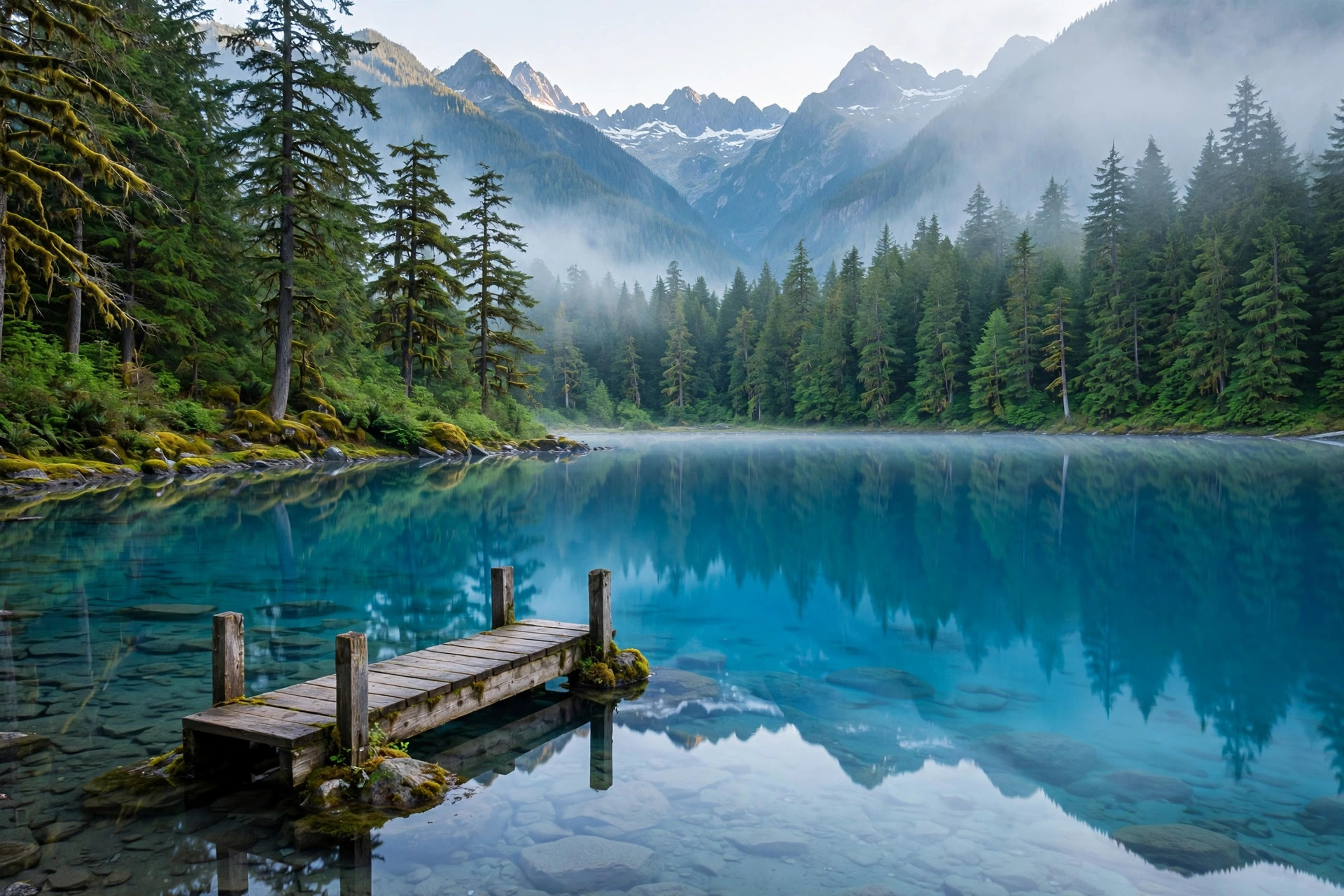
Descend in the afternoon and settle near Lake Crescent, a deep glacially carved lake with water so clear it barely looks real. It's a good first-night base: you're positioned between the mountains you just left and the coast you're headed to.
Day 2: Ruby Beach, then into the Hoh
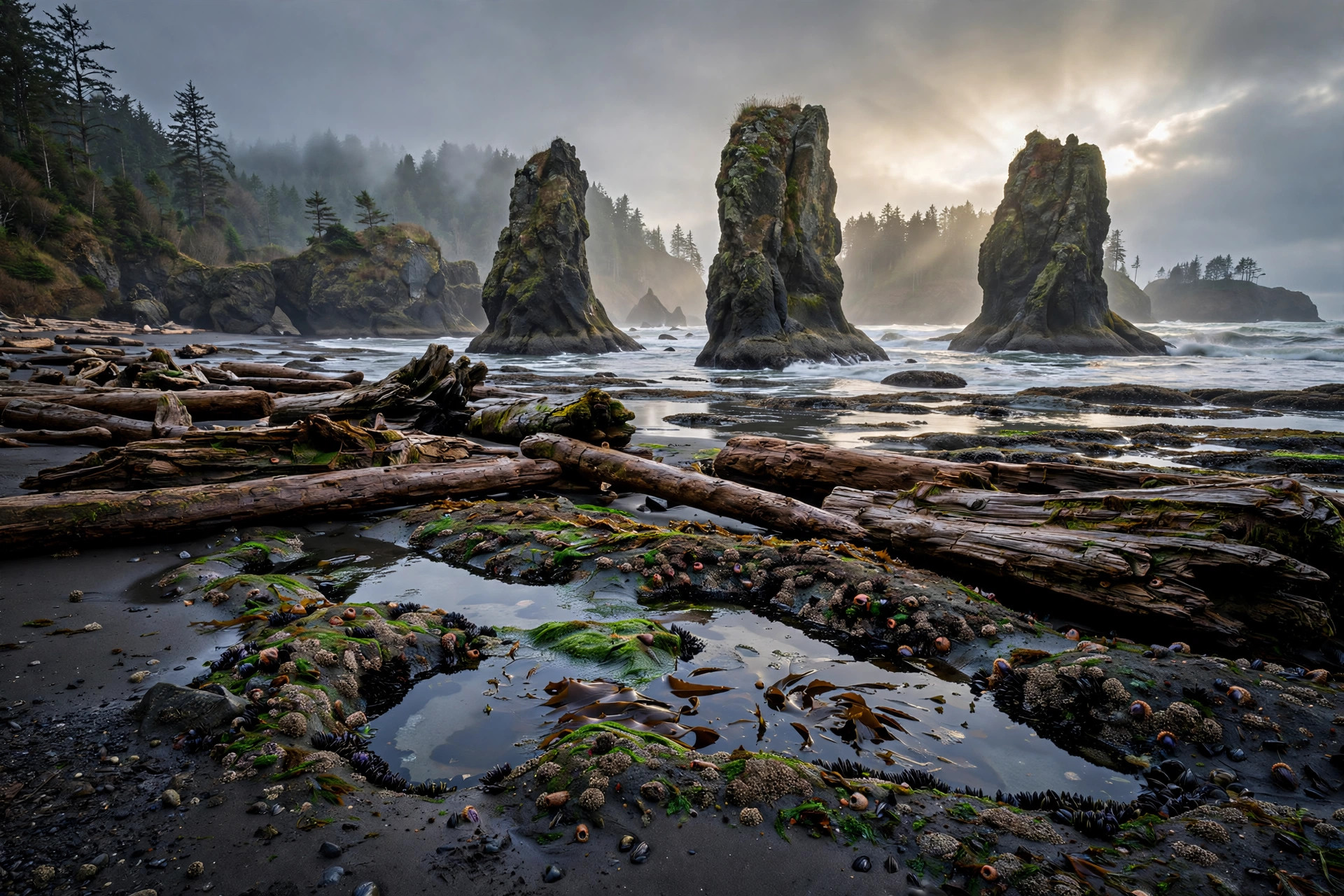
Head west to Ruby Beach in the morning. Sea stacks, tide pools, driftwood the size of cars — this is the Pacific Northwest coast at its most dramatic. Go at low tide if you can time it; the tide pools are worth planning around.
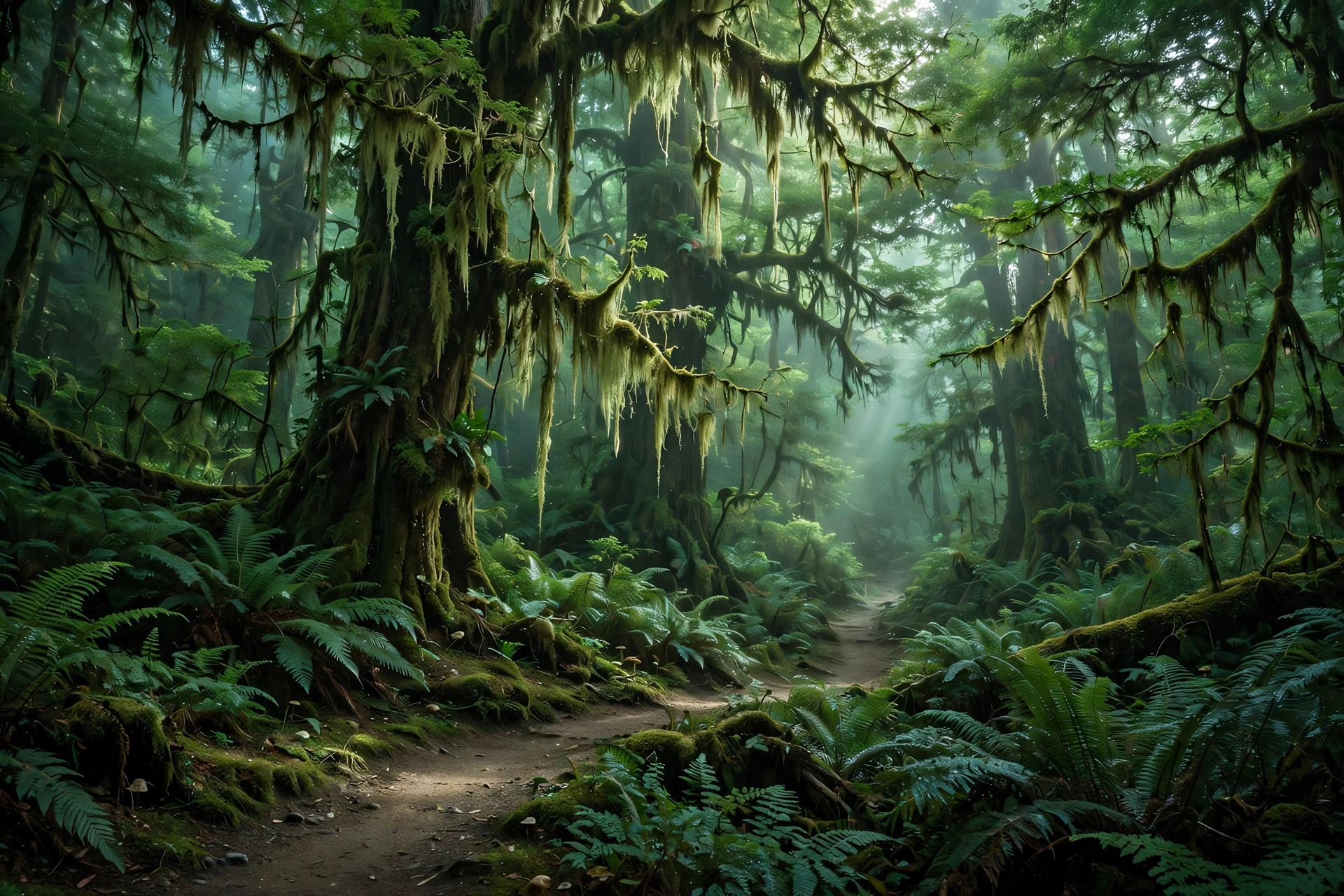
Then drive inland to the Hoh Rainforest, one of the wettest places in the country and the greenest place you'll ever stand. The Hall of Mosses is a short, flat loop trail through old-growth draped in clubmoss — it's the single most otherworldly walk in the park, and it's easy enough for every fitness level. Bring rain gear no matter the forecast. The Hoh makes its own weather, and "rainforest" is not a metaphor here.
Day 3: Slow morning, then the long way home
Sleep in, make coffee in the rig, and take one more walk — the rainforest in morning mist is the version you'll remember. Then loop home along the southern edge of the peninsula. You'll pass through working timber towns and along rivers, a completely different Washington than the one you drove through on day one.
The honest fine print
- July through September is the reliable window. June can still have snow above 4,000 feet, and the Hoh is at its fullest (and wettest) from late fall through spring.
- Book ahead in summer. Park campgrounds fill fast in peak season; reserve through recreation.gov rather than hoping for a walk-in.
- This is a highlights loop, not a deep dive. You'll leave wanting more — that's the point. The peninsula rewards repeat trips, and now you know the roads.
Our Sunseeker sleeps six, runs off-grid on its generator, and handles this exact loop comfortably — most park campgrounds are dry, which is exactly what the onboard tanks and batteries are for. Check availability and book your dates →