
Stories · October 12, 2026 · 4 min read
Never driven an RV? Here's your first-timer's guide to our Class C
No special license, no CDL, no mystery — just a big SUV with a kitchen. Everything a first-timer needs to know before taking our 28-foot Class C out.
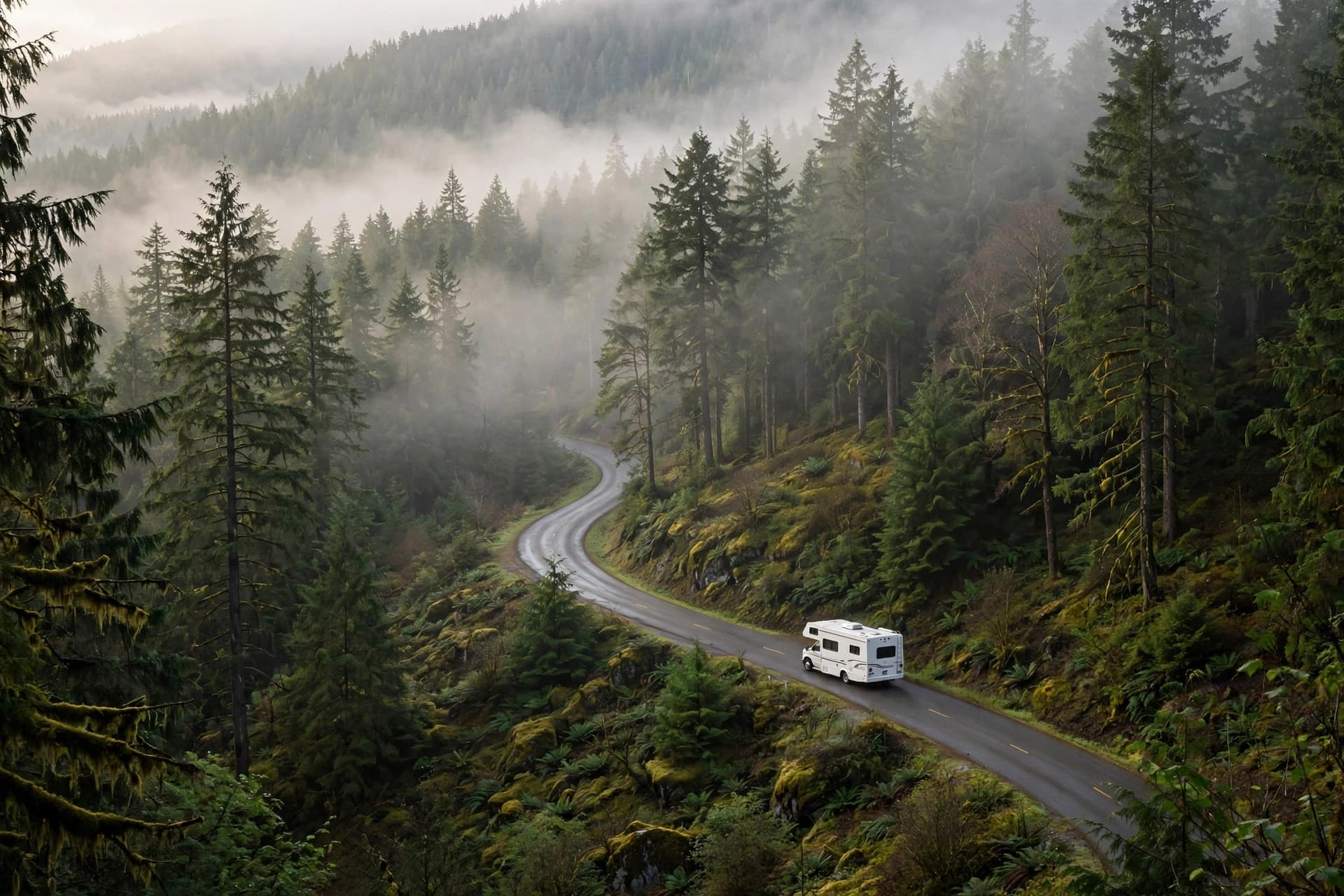
Almost every first-time renter asks us the same three questions: Do I need a special license? Is it hard to drive? What do I do about the tanks? Short answers: no, no, and we'll show you — it takes ten minutes. Here's the full version.
Do I need a special license?
No. In Washington (and every other state for a rig this size), a regular driver's license covers any RV under 26,000 pounds — no CDL, no endorsement, nothing extra. Our Sunseeker is rated at 14,500 pounds fully loaded, which is barely more than half the threshold. If your license lets you drive a car, it lets you drive this.
What does it actually drive like?
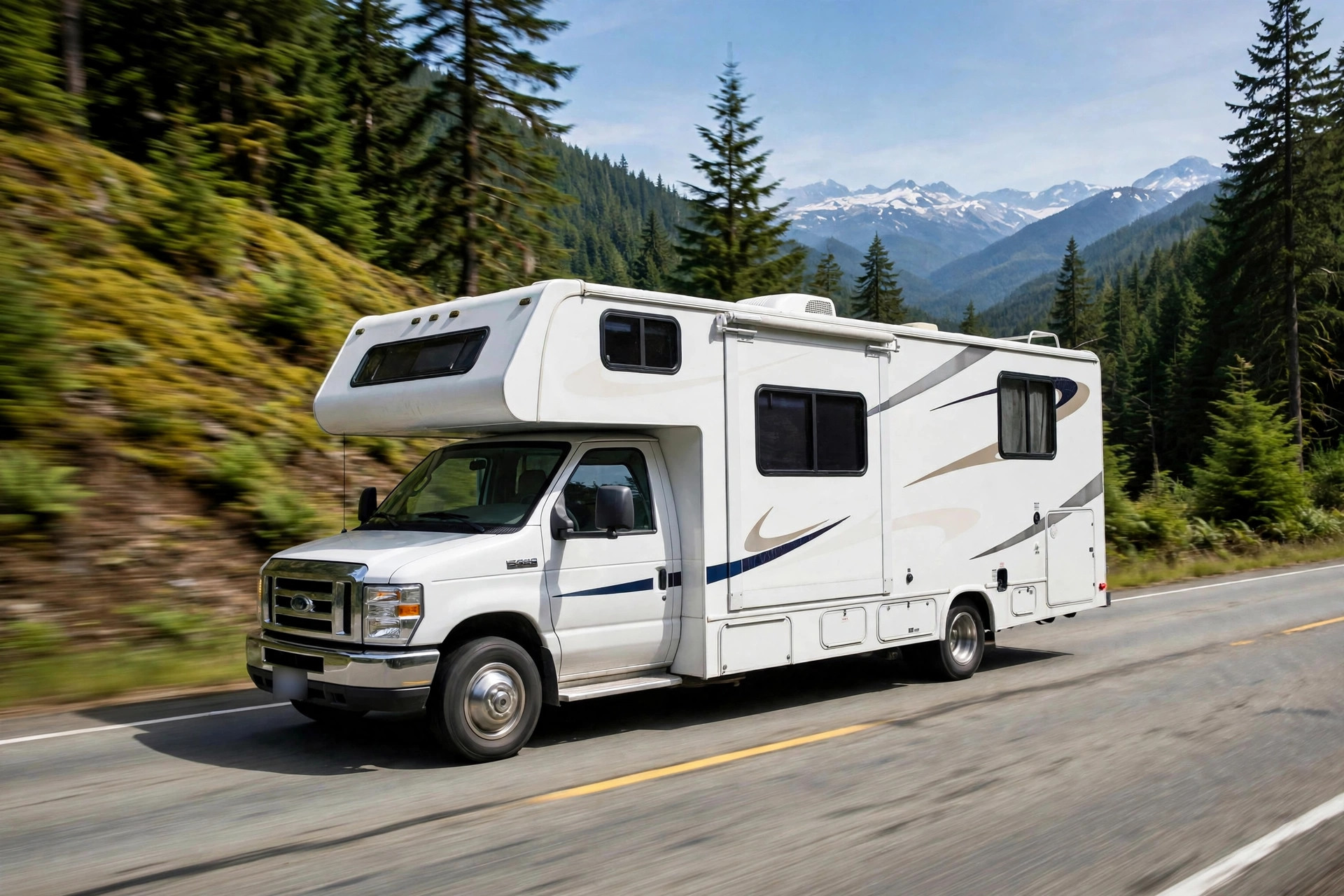
Like a big SUV with tall ceilings. It's an automatic on a Ford truck chassis, with a backup camera and big mirrors. That said, it is 28 feet long and tall, so respect the physics:
- Take turns wide. The rear wheels cut inside the front wheels' path — swing a little wider than feels natural until it becomes habit.
- Know your height. We tell every renter the rig's exact clearance at pickup. Low bridges, gas station canopies, and tree branches at older campgrounds are the only things that should make you nervous.
- Slow down earlier than you think. It brakes fine, but it weighs as much as several cars. Following distance is your friend.
- Plan fuel stops. A 28-footer doesn't squeeze into every corner gas station. Truck stops and larger stations are your easy mode.
- Backing up is a two-person job. One person drives, one person stands where the driver can see them in the mirror. Every experienced RVer does this. No shame in it.
Most renters tell us the nerves evaporate within the first half hour. By the first campground, they're parking like they've done it for years.
Hookups, explained in plain English
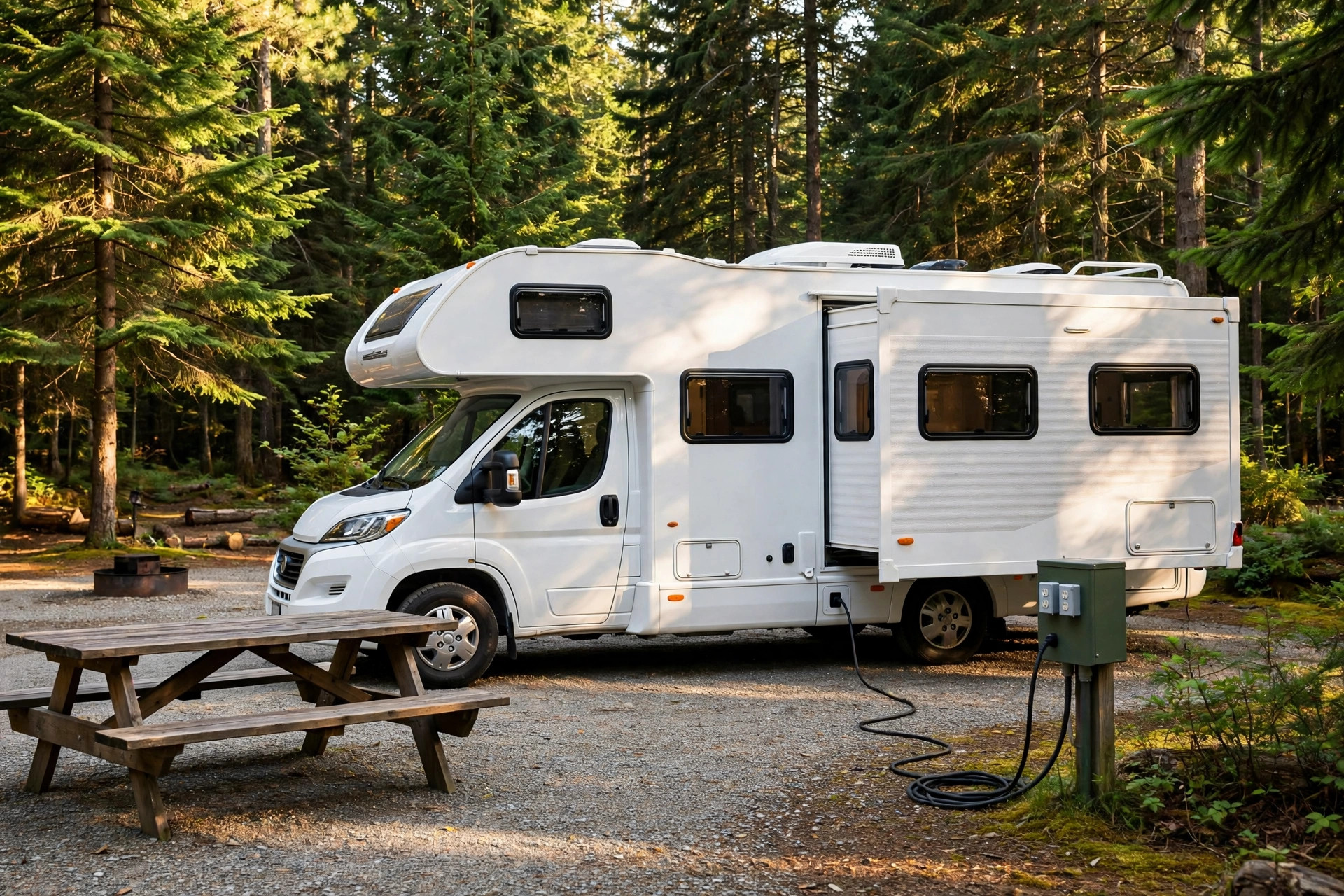
Our rig runs on 30-amp service — that's the standard RV electrical hookup, and virtually every developed campground offers it. When you pull into a site:
- Level first. Most sites are close enough; the rig has leveling blocks if you need them.
- Plug into the pedestal with the power cord. 30 amps runs the air conditioner, microwave, and outlets all at once.
- Hook up water with the fresh-water hose to the campground spigot.
- Put the slide-out out. One button extends the living area. Check outside first — make sure there's clearance and nothing (like a picnic table) is in the way.
- Sewer stays capped until you're ready to dump (more on that below).
If a campground only lists 50-amp or standard household outlets, adapters exist for both — ask us and we'll throw the right one in.
The tanks (don't worry)
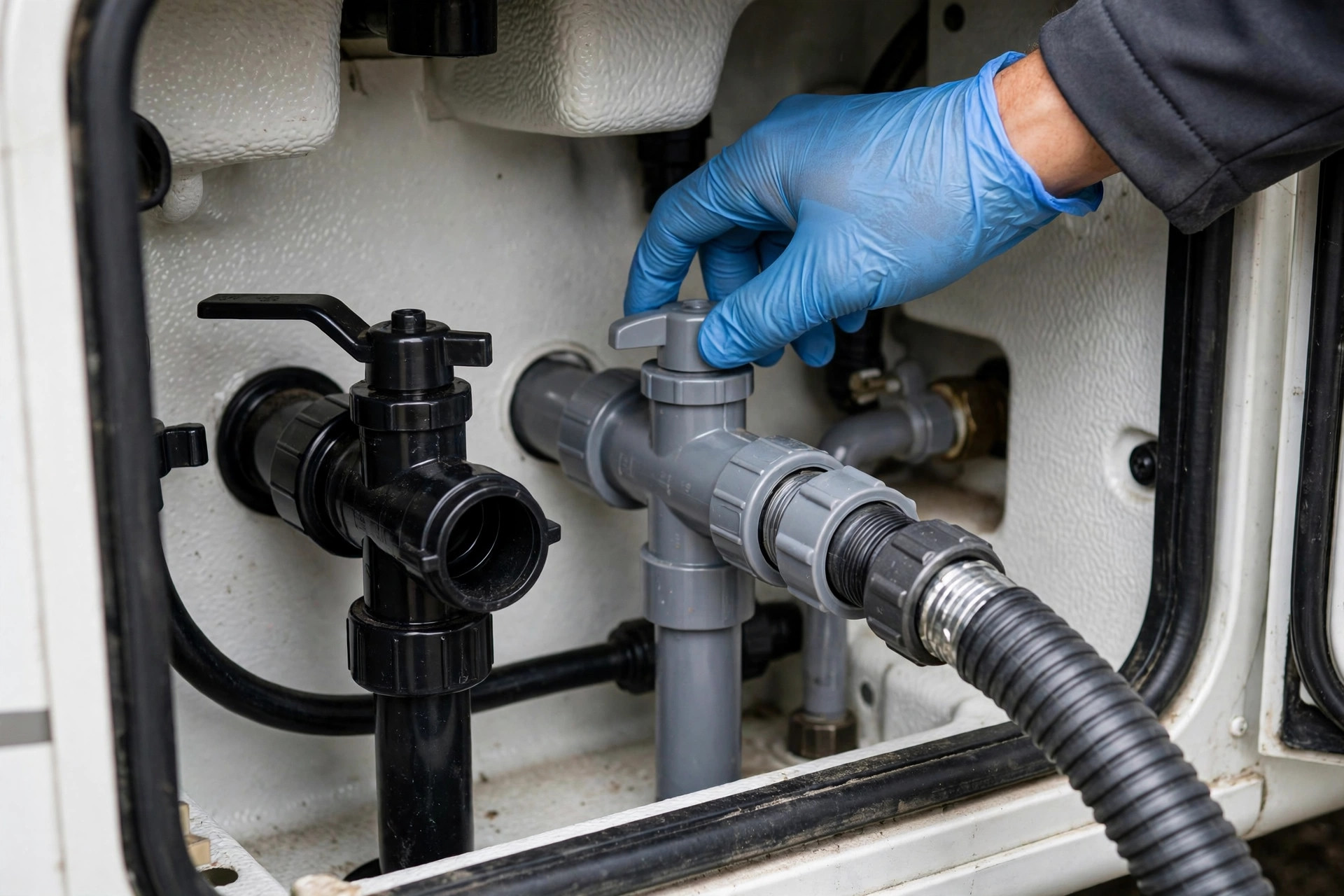
You've got three tanks: fresh water (what comes out of the taps), grey water (sinks and shower), and black water (the toilet). For a weekend trip, you mostly just… use everything normally. The gauges tell you how full things are.
At the end of the trip, the black and grey tanks need to be emptied at a dump station — a routine 5-to-10-minute job. We walk every renter through it at pickup, and we've written the whole thing up with pictures-in-words in our guide to the $150 dump fee (spoiler: the fee only exists because we'd rather spend turnover day deep-cleaning your kitchen than emptying tanks — bring them back empty and you'll never pay it).
Two tank rules that prevent 90% of problems:
- Only RV toilet paper goes in the toilet. Regular TP doesn't break down fast enough and causes clogs. We stock the right kind for every trip.
- Keep the black tank valve closed until the tank is at least two-thirds full, then dump it all at once. Leaving it open lets liquid drain while solids pile up — RVers call the result a "poop pyramid," and you do not want one.
What to expect at pickup
We meet you in Lake Stevens, hand over the keys, and do a full walkthrough: how everything works, where everything is, what the gauges mean, and a practice run of the slide-out and the dump valves. Plan on 30–45 minutes. Ask every question you have — there are no dumb ones, and we'd rather answer them in the driveway than over the phone from a campground.
Then you drive away in a fully sanitized rig — we sanitize everything between trips — with RV toilet paper, basic kitchenware, hand soap, and cleaning supplies already on board.
The mindset shift
Here's what first-timers don't expect: after about a day, the rig stops feeling like a vehicle and starts feeling like a cabin that happens to move. Morning coffee tastes better when the view outside the dinette window was your choice. That's the whole pitch, and it's why most of our renters come back.
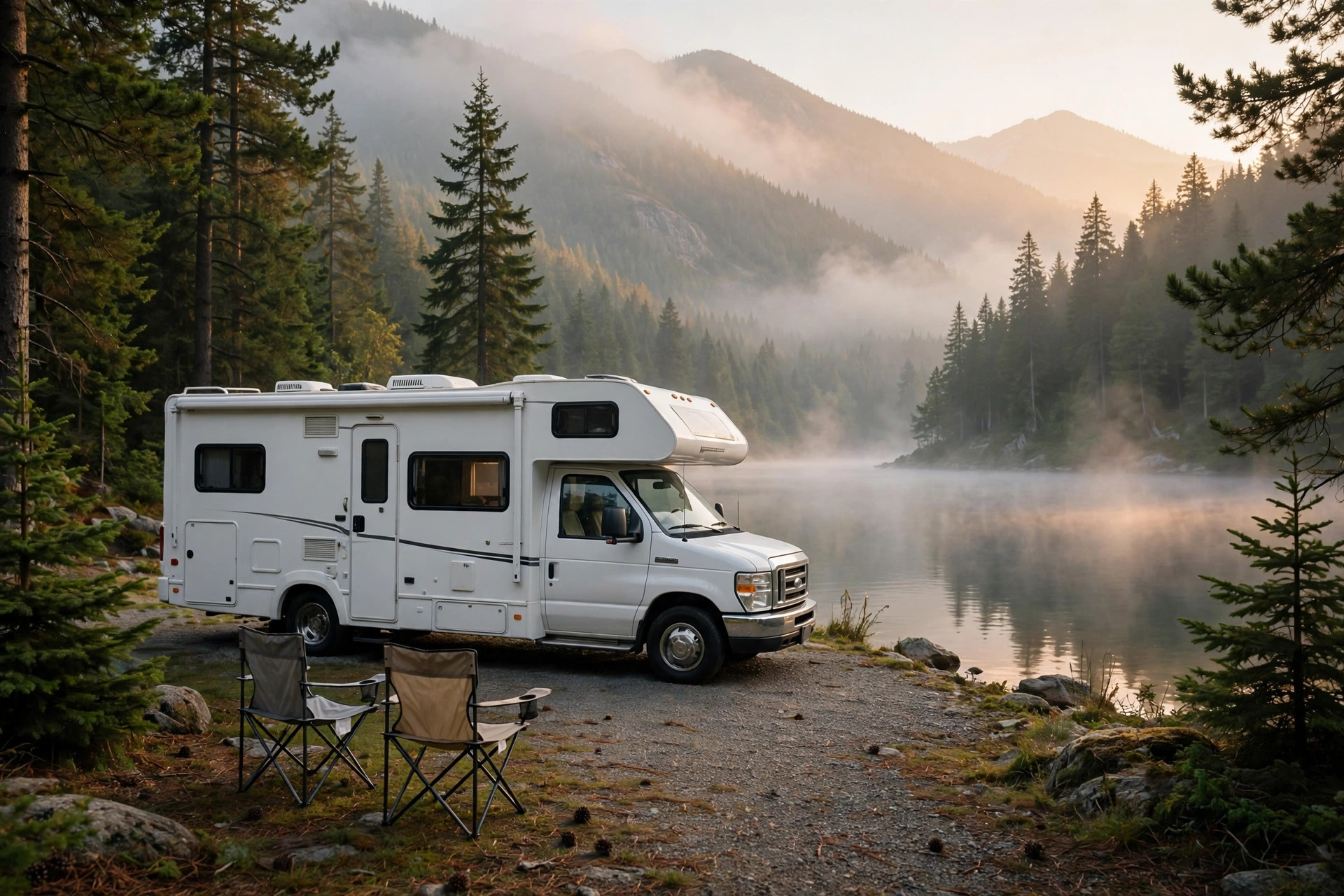
Ready for your first trip? Our Class C is the gentlest possible introduction — big enough for the whole crew, easy enough for a first-timer. Check availability and book your dates →